
Anchors and anchoring
Most of our hammock stands need anchoring, and best practices are much the same for all. Safety requires matching anchor strength to the fall hazard. Never hang higher than you are willing to fall. Worst is a stand on concrete anchored in lawn: hard where you fall, soft where you anchor. Flip both.
Prefer on-site anchors. Our best anchoring tip: don't use the ones we sell you unless you must. A shrub base, boulder, door hinge, picnic table, vehicle, fence post, handrail: these work in all weather, unlike the ground anchor that holds at dusk but dumps you in midnight rain.
Tensa4 can get by with one anchor point, usually found on site: even at Camp Mudflat, the vehicle you came in is your fallback anchor. Monopods for traveling lighter, like Tensa Solo, Psolo (a Tensa4 pole set up as Solo), or Trekking Treez, require two per pole, and their placement needs may force using anchors you pack in. Scout setup sites for natural or man-made anchors and supports as carefully as you would for hammock-spaced trees without a stand. Each on-site anchor you use frees up a packed anchor to double up elsewhere.
Connecting guylines
Guylines are color-coded: black ends attach to the stand, orange ends to anchors. Three ways to connect to anchors:
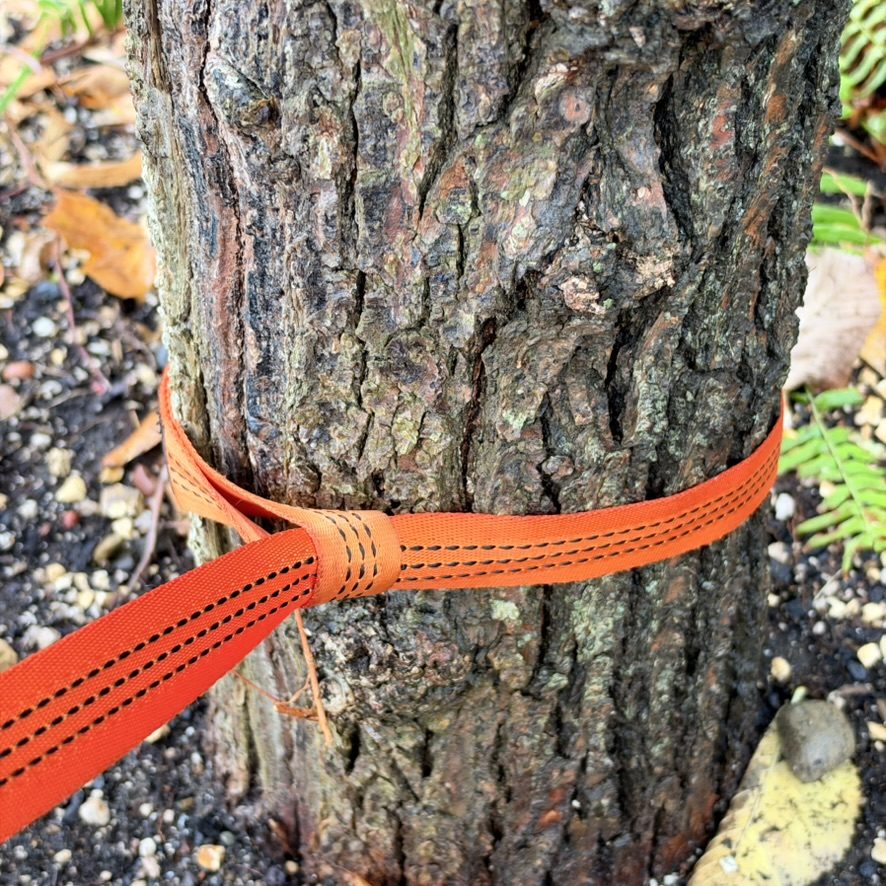
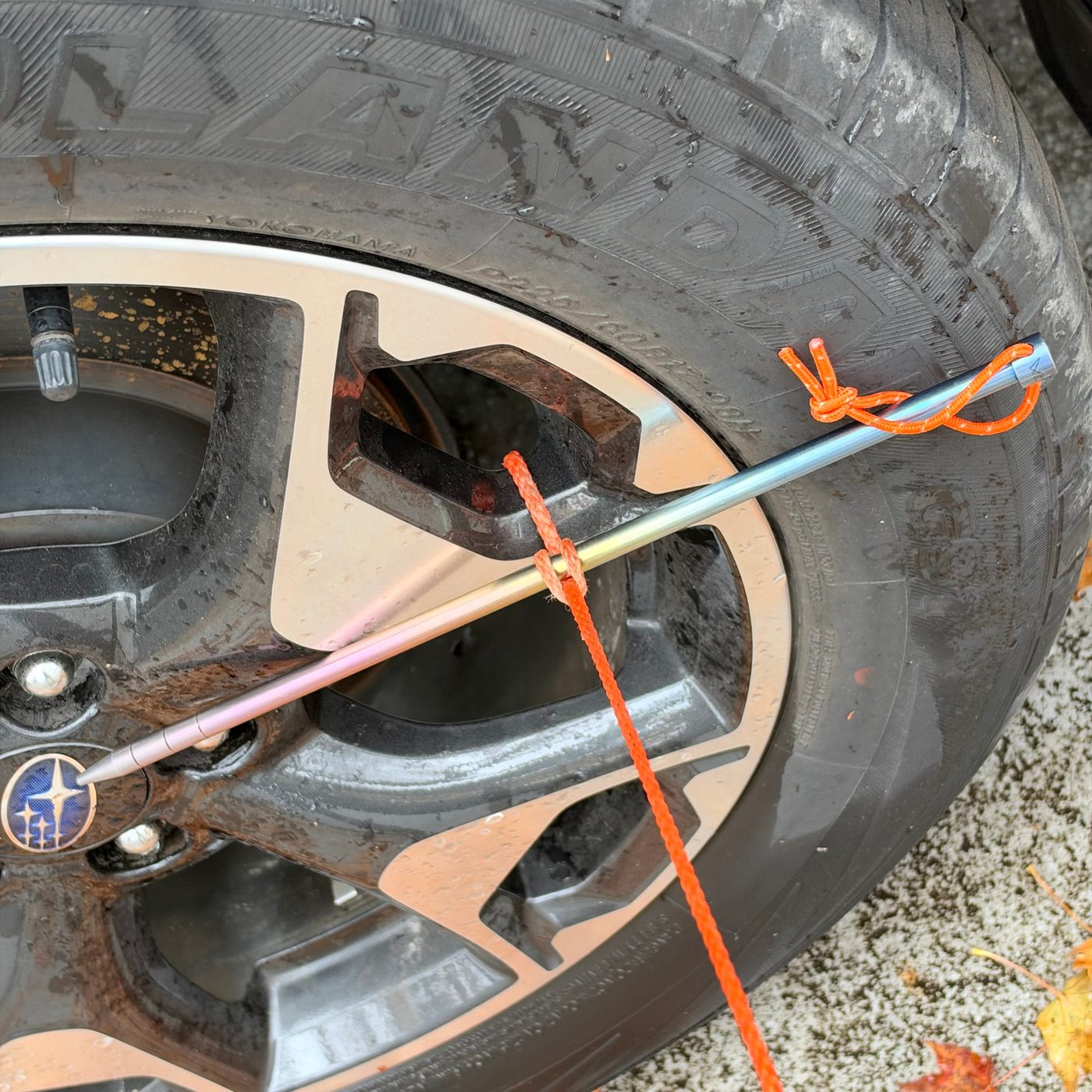
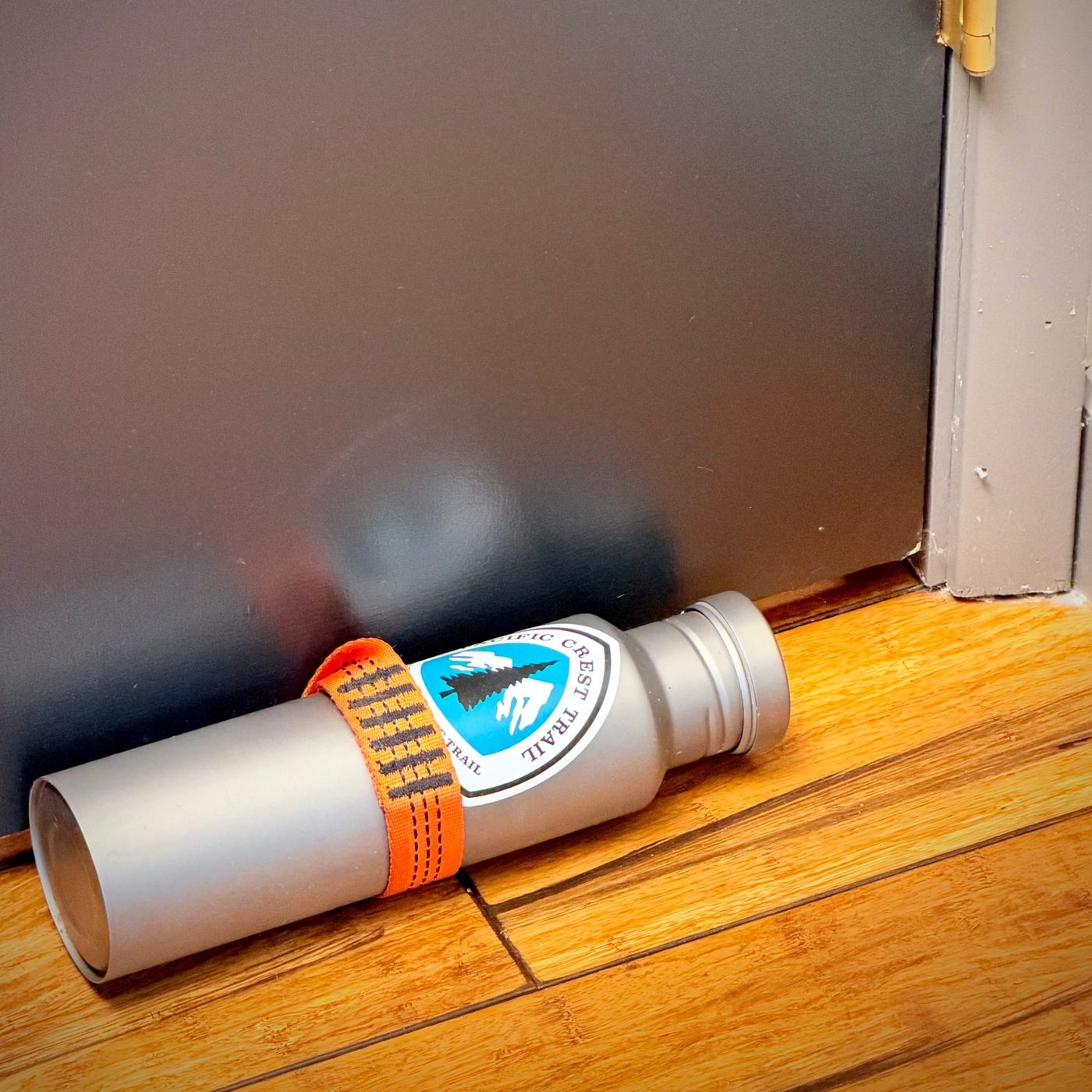
Ground anchors
Carry a selection of ground anchors suited to the soils you may encounter. Technique matters more than selection.
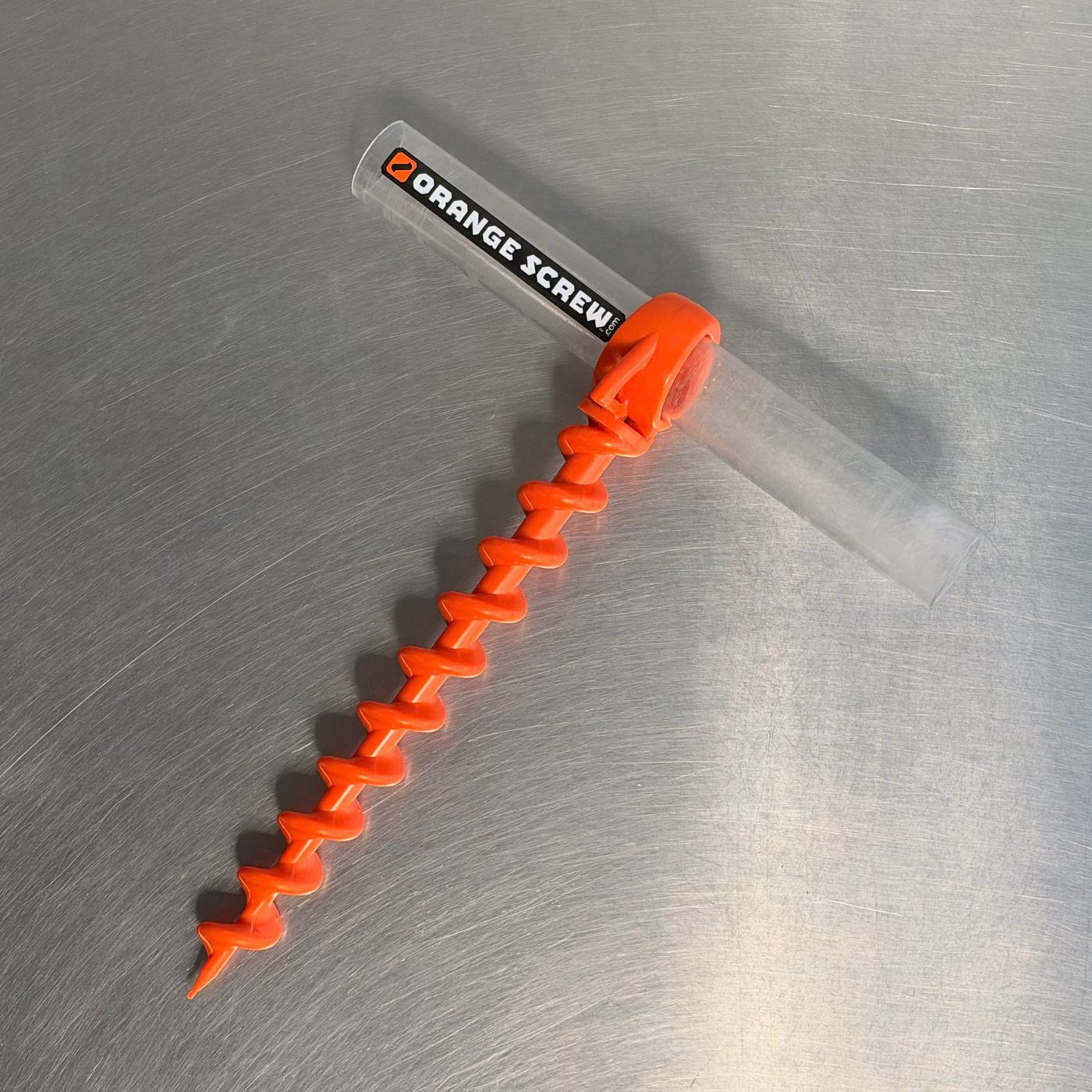
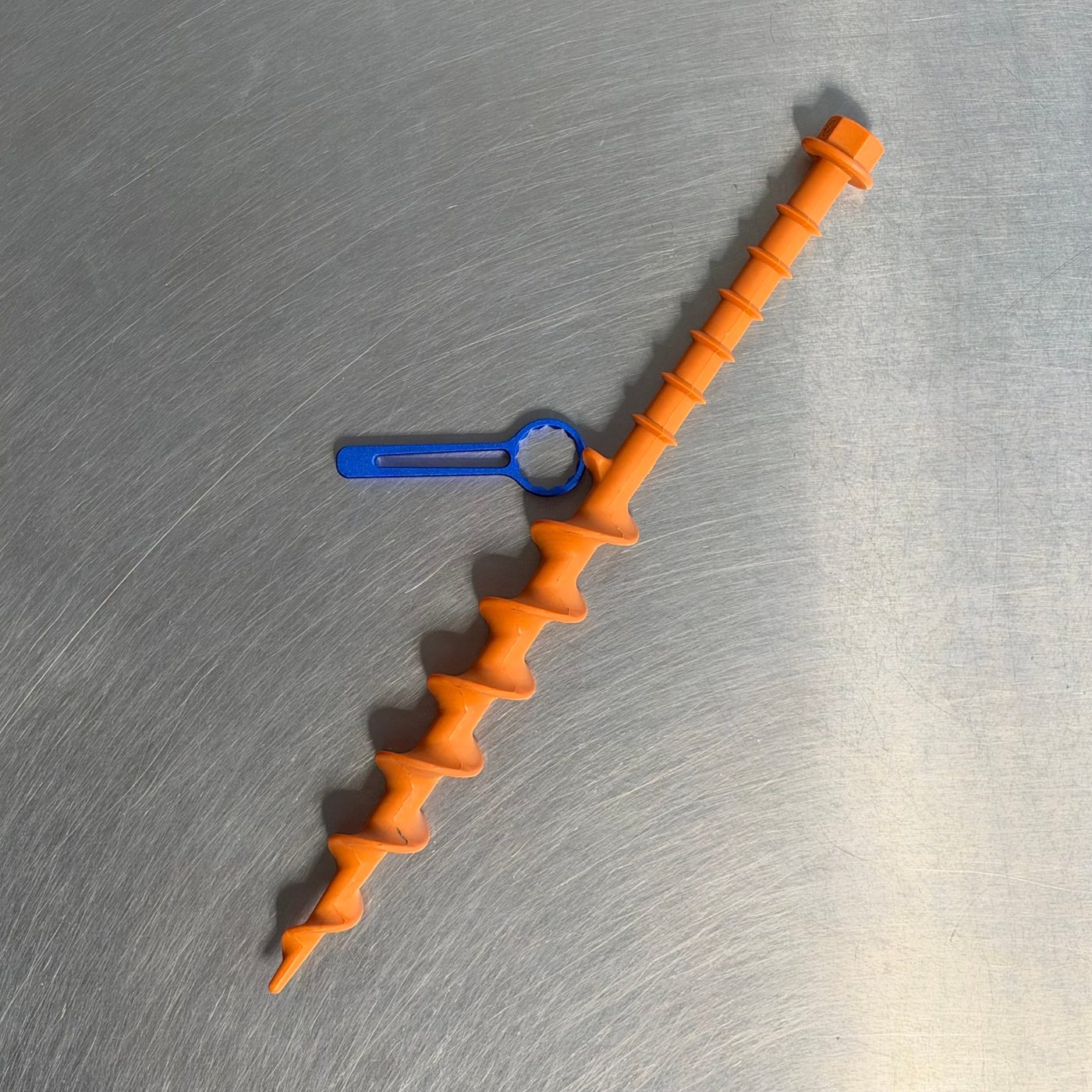
Attach at ground level
Sink anchors all the way when the ground allows. If it resists hard, stop: firm ground doesn't need full penetration. Always attach the line at ground level, never at a higher point.
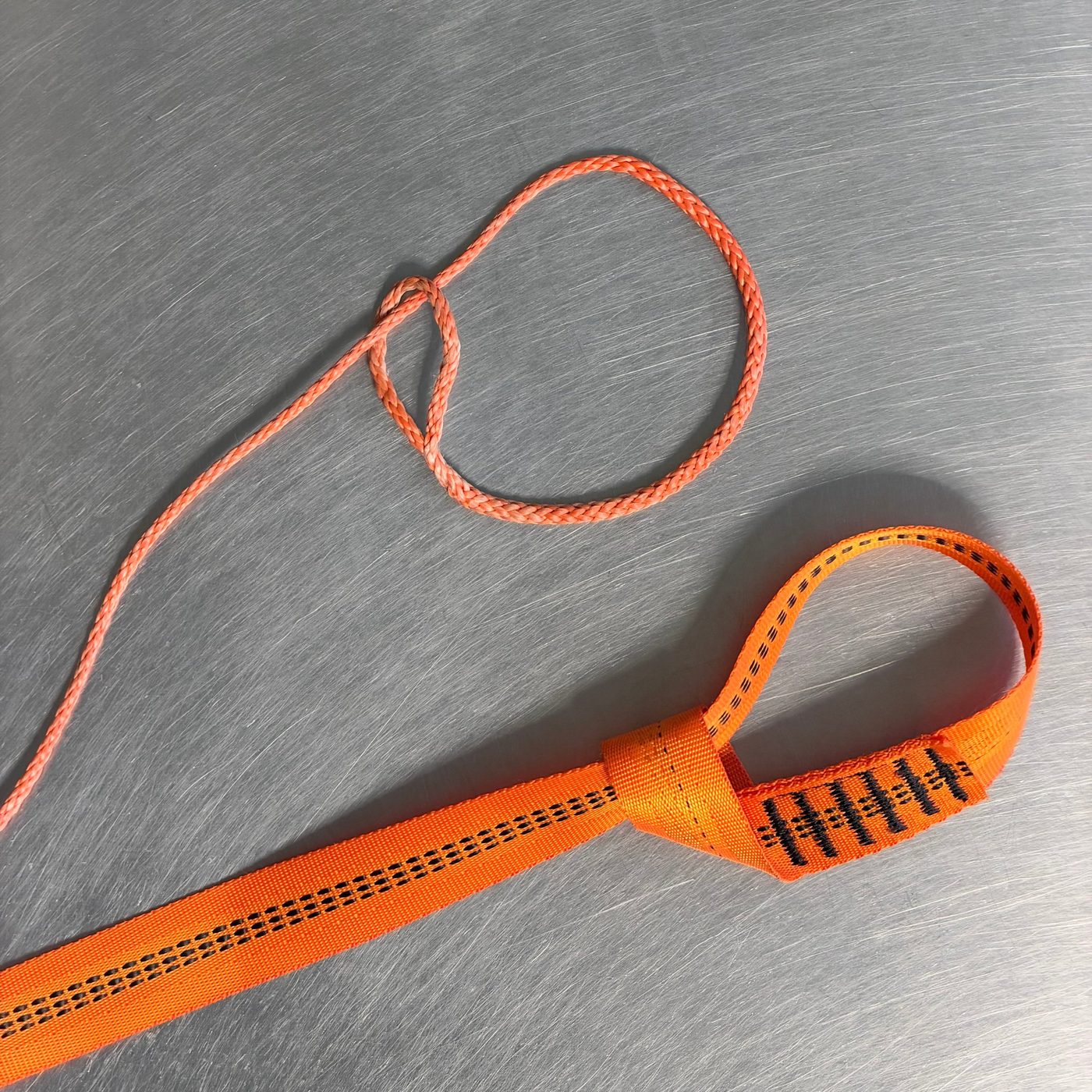
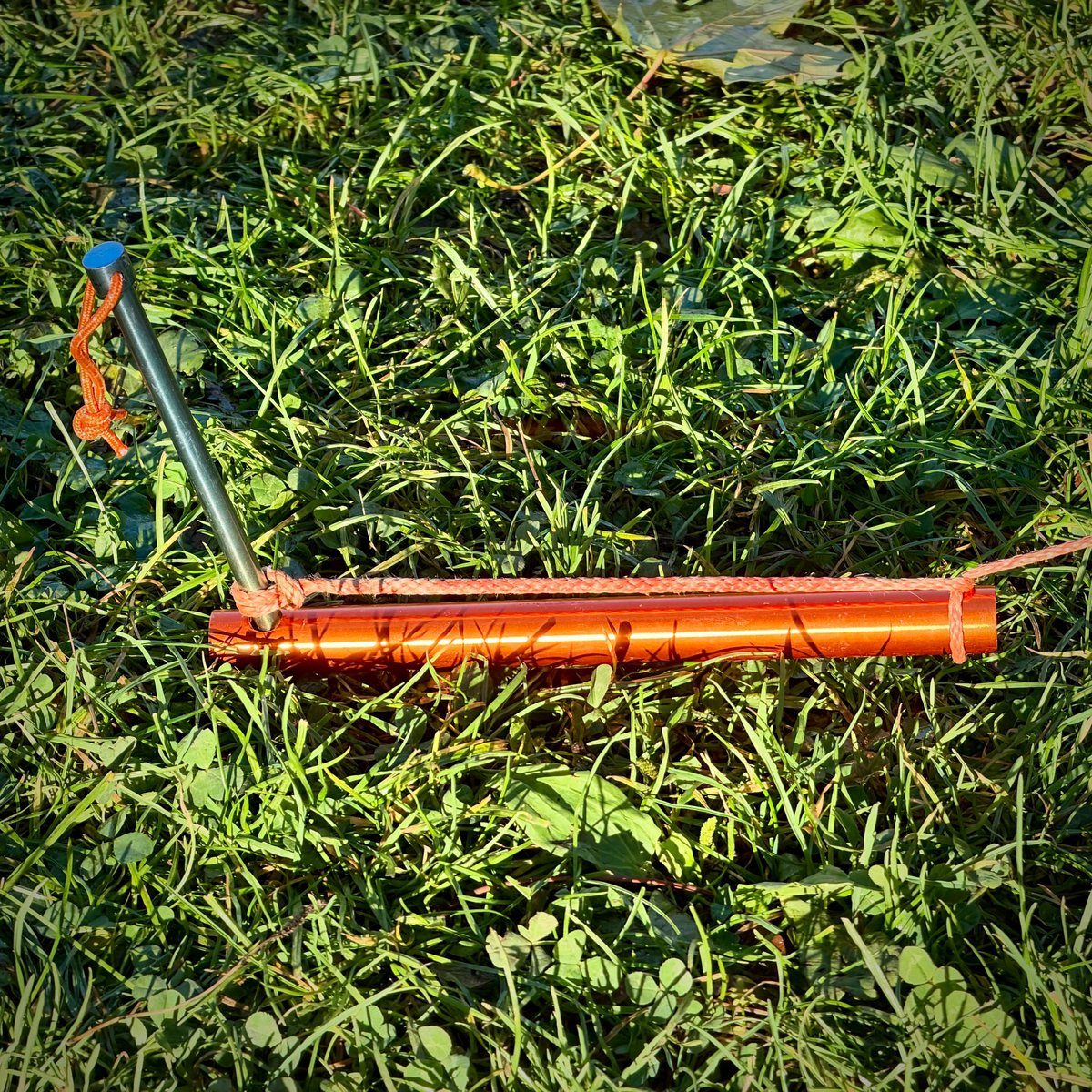
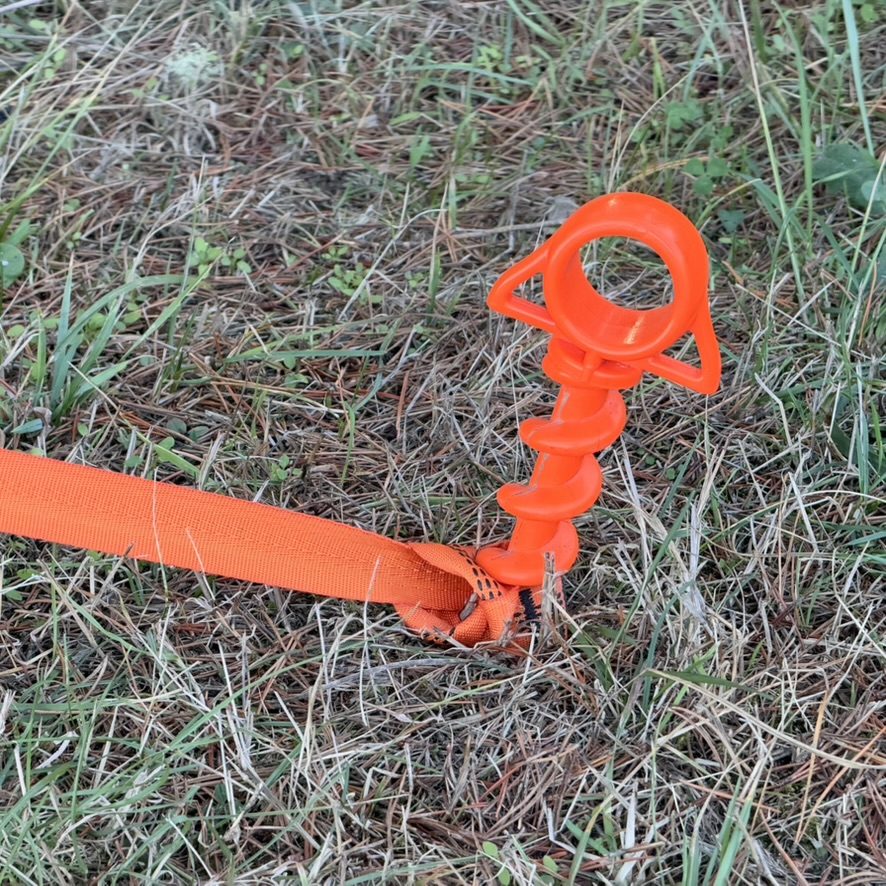
Loose ground is bad ground
Loose or soft ground (coarse dry sand, pea gravel, mud, duff) holds anchors least. Suburban lawn is often treacherous, too: just thin sod over loose fill. Feel anchors as you drive them: easy in means easy out. Your feet are the surest fix: walk to firmer ground or the nearest on-site anchor. When you can't move, escalate:
- Dig down to firm ground that clumps. If you can move it easily without tools, it's too loose. Refill on leaving (Leave No Trace).
- Hit a buried rock or root? Great. Probe with a stake to trace its back edge, and drive in there, so the hidden object takes the pull.
- Group two anchors. Drive them at angles, heads close, sharing one line. Or set them apart and bridge them with extra line, connecting the guyline to that bridge in a Y to balance the load.
- Last resort: when no anchor holds, obstruct a stopper with a heap of rocks or soil, above ground or buried as deep as necessary.
Setting anchors
Anchors hold better placed farther from the stand, all else equal: site permitting, set them nearly as far out as the guylines reach, leaving enough tail to tension them. A monopod's pole and its two anchors form a triangle, ideally long and symmetrical: anchors equally far out, spread only as wide as the pole needs to keep from toppling sideways. About a body length apart is usually plenty; wider loads each anchor harder.
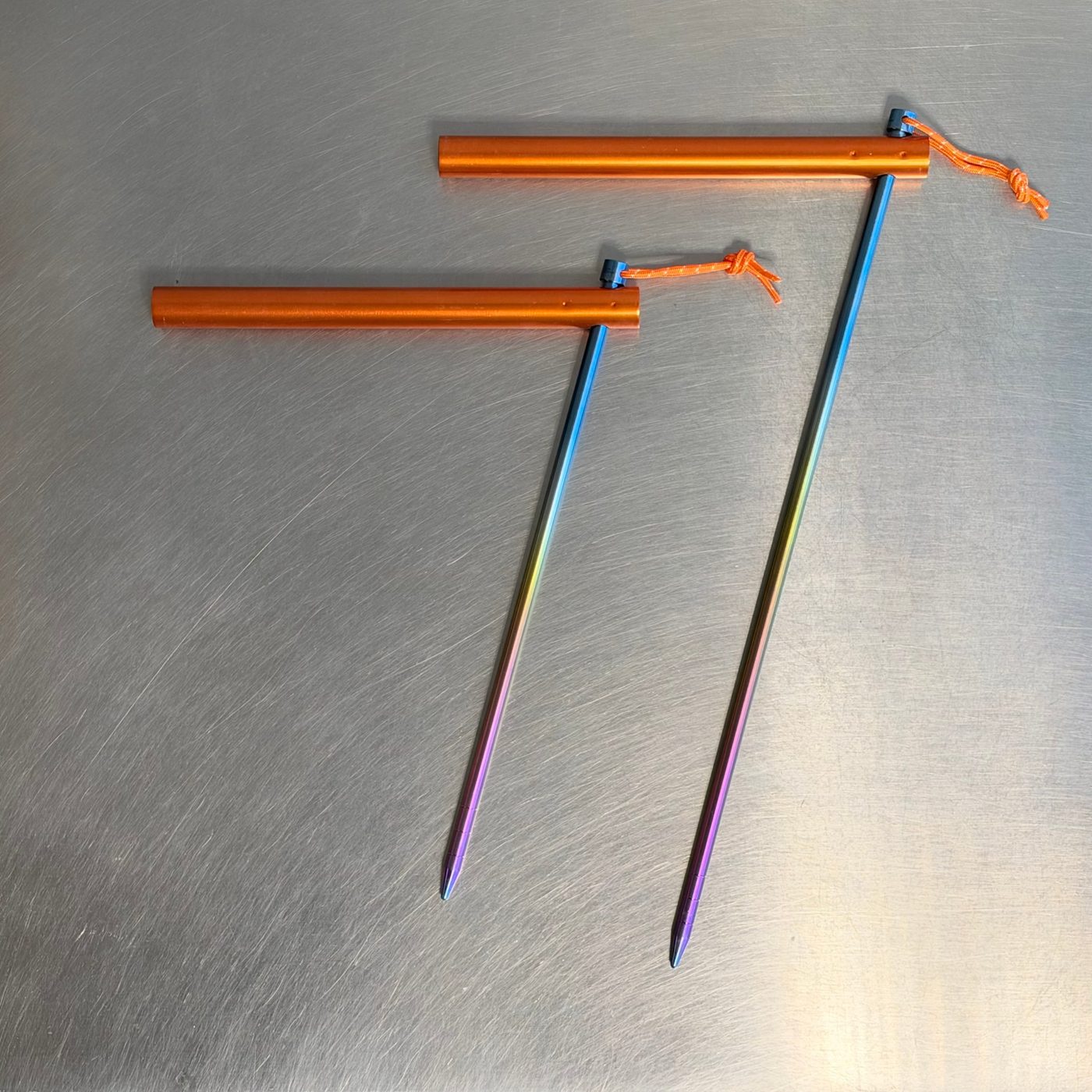
Screw anchors just twist in. Boomstakes need explaining. Where the bare stake would pull out, the boom helps it resist like a hook. Lay the boom on the ground pointing toward the stand, and drive the stake through its offset holes: seen from the side, boom and stake form a 7, its stem buried. Lark's-head the line onto the stake just above the boom, then half-hitch it around the boom's far end. Watch the video for details.
Anchoring monopods
Monopods all work much the same. Where a single Tensa4 foot anchor must resist only about half your body weight, monopod anchors must be firmer.
▶Use an on-site support for the high end
A suitable tree, rock feature, or vehicle means you need only one pole, and half the ground anchors. Hang the high (foot) end from it and let the pole take the lower head end, leaning it steeply away from the hammock to lower anchor loads.
Rake (lean) the pole
Rake is your first and strongest tool. Lean the pole away from the hammock so it carries more of the load itself, easing both guylines and their anchors. But not too far:
- Too much and the foot slides out from under the load. Dig a divot where the foot rests to keep it from sliding. If the pole sinks deeply, set a flat rock or similar in the divot. At the extreme lean angles that load anchors least, a Tensa Toggle Loop lark's-headed around the foot and staked can keep it from skidding. A foot with a through-hole can also take a stake to stop sinking.
- Rake lowers the hang point. Need more height? Shorten the suspension rather than straighten the pole.
- The guylines should meet the pole at about a right angle (90°), never wider: the angle between the pole below the hang point and the guylines running down to the anchors. Set the anchors first and then rake within what the angle allows.
If distant anchors pull out, move them progressively closer. Closer anchors leave more room to rake before that angle reaches 90°, and the added rake is what sheds their load.
Move the foot off a weak anchor
Where rake (moving the foot toward the hammock) eases both anchors together, moving the foot side to side loads one over the other. Move the foot away from a weak anchor, toward the strong side. An inch or two can be enough. Your weight in the hammock then leans the pole further, loading the strong anchor and relieving the weak one.
The same move evens out line tensions when the site forces a lopsided layout. Shifted far enough, one line goes slack and the strong anchor bears everything: fine for a tree or other solid on-site anchor, rarely for a ground anchor. Each of our guylines is rated for the full hammock load, so you can rely on one if its anchor is up to it: a slack line still steadies the pole while the hammock is empty.